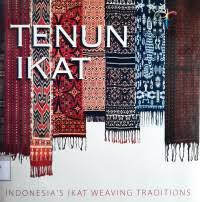
book
Tenun Ikat "Indonesia's Ikat Weaving Tradition"
Indonesia's textile culture includes a large repertoire of techniques, the best-known of which is perhaps the dye-resist techniques universally referred to as ikat weaving. The Malay word 'ikat' means to bind, tie, or wind around. In this process, the parts of the yarn that are to remain undyed are protected by binding them tightly with a vegetable fiber that resists penetration of the dye. The result is an intricate piece of cloth of high quality produced over a long period of time. Warp ikat is widely dispersed in Indonesia, found in such places as the Bataklands of North Sumatra, on the islands of Flores, Sumba, Rote, Sabu, Ndao, and Timor in East Nusa Tenggara, in Kalimantan, especially in the interior regions, in Sulawesi in Rongkong and Galumpang, and on the Maluku islands, such as Tanimbar and Kisar. While the patterning ikatted into Indonesian cloths often reflects the adoption of foreign influences, such as from Indian textiles that were so popular in the islands, the local peoples made their own interpretations and managed to produce amazing pieces to a level that sometimes rose far above that of the original. This is why some Indonesian textiles are regarded today as among the finest in the world. Traditional textiles have parrticularfunctions in the social, religious, aesthetic, and economic aspect of community life in Indonesia. Ikat textiles have long been known to have such roles. Historically, warp and weft ikat have diffused into local cultures at differnt times and in differnt ways, warp ikat earlier than weft ikat. In Kalimantan, for example, warp-ikat callled pua kumbu are brought into use on ceremonial occasions in the longhouse, woven by the inland Dayak People. In Sulawesi, the Torajan People, who inhabit the mountainous portion of northern South Sulawesi, have a typical warp-ikat blanket that is important in funeraryrites, whereas Java's weft-ikat tradition is centered around the town of Troso on the north coast of Central Java and the towns of Gresik and Lamongan across the border in East Java. Weavers in these eeplaces produce weft-ikat sarongs and other textile decorated with traditional motifs taken from all over the country, but especially from eastern Indonesia. The Javanese make them for traditional and modern uses as well as for export to other countries.
Ketersediaan
Informasi Detail
- Judul Seri
-
-
- No. Panggil
-
R.746.1 Jer t
- Penerbit
- Jakarta : Ministry of Cultur and Tourism Republic of Indonesia., 2010
- Deskripsi Fisik
-
122 hal. ; ill. ; 25 x 25 cm.
- Bahasa
-
Inggris
- ISBN/ISSN
-
-
- Klasifikasi
-
-
- Tipe Isi
-
-
- Tipe Media
-
-
- Tipe Pembawa
-
-
- Edisi
-
Second Edition
- Subjek
- Info Detail Spesifik
-
-
- Pernyataan Tanggungjawab
-
-
Versi lain/terkait
Tidak tersedia versi lain
Lampiran Berkas
Komentar
Anda harus masuk sebelum memberikan komentar
 Komputer, Informasi, & Karya Umum
  Pengembangan Diri
  Agama
Agama  Ilmu-Ilmu Sosial
  Bahasa (Linguistik)
  Sains / Ilmu Murni
  Teknik dan Manajemen
  Kesenian, Hiburan, dan Olahraga
  Fiksi dan Kesusastraan
  Sejarah & Geografi